Please Choose Your Language

Views: 0 Author: Site Editor Publish Time: 2026-10-23 Origin: Site

Heat is the undisputed enemy of electrical infrastructure. In the high-stakes world of energy distribution, managing thermal stress determines the lifespan and reliability of any power grid. When stepping up generation voltages or stepping down transmission loads, a power transformer handles immense amounts of energy. As these massive machines operate, the electrical resistance within their copper windings and magnetic core generates significant heat. This heat must be continuously and effectively dissipated to prevent catastrophic failure.
Enter the ONAN cooling system. Standing for Oil Natural Air Natural, this is widely recognized as one of the most reliable methods for thermal management in the industry. By leveraging the fundamental laws of thermodynamics, this passive cooling technique eliminates the need for complex machinery. This comprehensive guide will explore the mechanics behind these systems. We will outline their unique operational benefits, compare them to alternative cooling methods, and provide actionable engineering insights on specifying the right equipment for your specific project needs.
Passive Operation: This is a completely passive cooling method relying on the natural convection of insulating fluid inside the tank and ambient air outside.
High Reliability: Operating without moving parts like electrical fans or forced oil pumps ensures the system offers exceptional reliability and demands minimal routine maintenance.
Cost Efficiency: Eliminating the parasitic power losses associated with actively running cooling equipment significantly reduces long-term operational costs.
Ideal Use Cases: These units are perfectly suited for medium-to-large distribution networks, remote renewable energy substations, and urban environments where low noise pollution is a strict priority.
From an engineering perspective, recent trends in grid modernization have placed a renewed spotlight on passive thermal management. Global infrastructure is aging rapidly. Meanwhile, energy demands from electric vehicle charging and industrial electrification continue to surge. Grid operators are prioritizing equipment that offers both high overload capacity and sustainable, low-maintenance operation.
Market analysts note a growing preference for passive cooling designs in mid-tier substations and decentralized renewable energy grids. Utilities are increasingly pairing traditional passive systems with advanced IoT thermal sensors. This integration allows operators to monitor real-time core temperatures. Consequently, they can push the equipment closer to its thermal limits without risking insulation degradation. The focus has decisively shifted toward robust, set-and-forget solutions that reduce overall operational expenditures.
To understand the solution, one must first understand the problem. During the voltage conversion process, transformers experience inherent energy losses. These are primarily categorized as copper losses in the windings and iron losses in the core. This lost energy manifests directly as heat.
If this thermal energy is not aggressively managed, the internal temperature will spike. Overheating leads to accelerated degradation of the paper insulation. Eventually, this compromises the dielectric strength of the unit. The result? A drastically reduced operational lifespan and a high risk of explosive failure.
Cooling methodologies exist on a spectrum. They range from entirely passive designs to highly active, forced-circulation systems. The natural convection approach represents the baseline standard for the vast majority of oil-immersed units up to roughly 30 MVA. It provides a foundational layer of thermal protection. This balance between manufacturing costs and long-term durability makes it the default choice for most distribution projects.
Deconstructing the acronym reveals the elegant physical science driving the cooling mechanism. It is a two-part process working in continuous harmony to draw heat away from critical internal components.
Inside the heavy steel tank, the active parts are completely submerged in insulating fluid. This is typically highly refined mineral oil or modern eco-friendly dielectric esters. As the internal components generate heat under electrical load, the fluid immediately surrounding them warms up.
Physics dictates that hot fluid expands and becomes less dense. Through the thermosyphon effect, this lighter, heated fluid naturally rises to the top of the tank. Simultaneously, cooler, denser fluid from the bottom rushes in to replace it. This creates a continuous, unforced internal circulation loop.
Once the hot fluid reaches the upper portion of the tank, it flows outward into the external radiators or corrugated cooling fins. Here, the second phase begins. Heat transfers through the thin metal walls of the radiators to the surrounding environment.
Ambient air naturally flowing over these external fins absorbs the thermal energy. As the surrounding air heats up, it rises and pulls fresh, cool air upward across the radiator surfaces via natural convection. The internal fluid is now cooled. It sinks back down to the bottom of the radiators and re-enters the main tank to repeat the cycle.
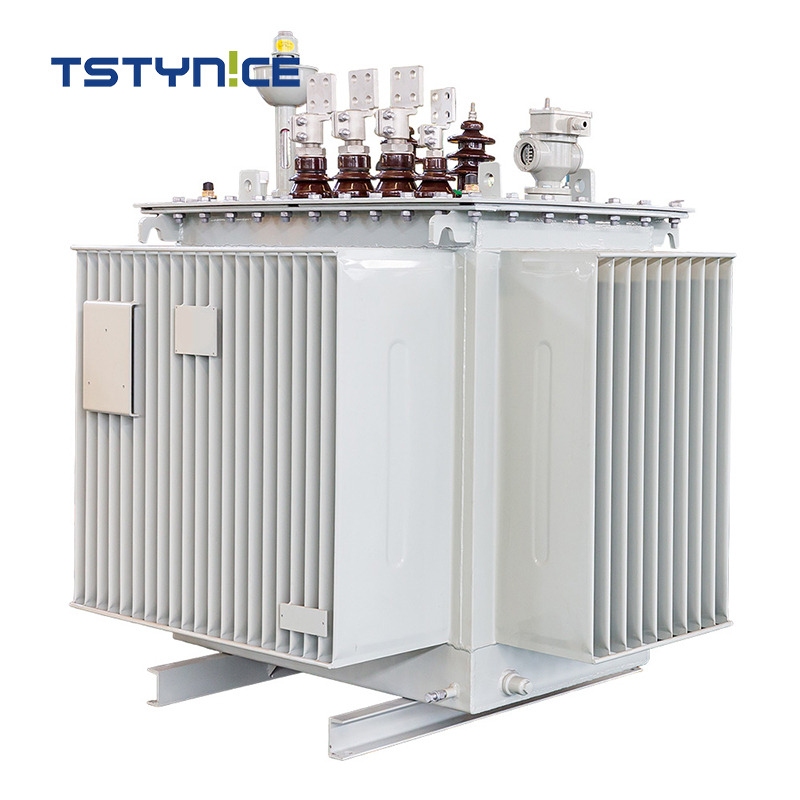
A reliable ONAN power transformer relies on a few critical structural elements manufactured to strict tolerances. For instance, top-tier equipment typically features a rated capacity ranging from 30 kVA up to 31,500 kVA, supporting voltage classes of 10kV or 35kV. The main tank houses a high-quality silicon steel core and acts as the primary fluid vessel. Radiators dramatically expand the surface area exposed to the outside air, accelerating heat dissipation. Finally, the conservator tank accommodates the expansion and contraction of the fluid volume as temperatures fluctuate throughout the day.
One of the most compelling arguments for this passive architecture is its pure energy efficiency. Active cooling setups require dedicated electrical circuits to run heavy-duty fans and submersible pumps. These auxiliary systems consume a portion of the electricity the substation is supposed to be distributing. This is known in the industry as parasitic loss.
In contrast, a naturally cooled unit directs all its energy toward its primary voltage conversion function. This ensures maximum throughput and lower utility overhead.
Mechanical complexity breeds failure. Because this system inherently lacks moving parts, the probability of component breakdown is drastically minimized. There are no fan motors to burn out. There are no pump bearings to seize. There are no complex control relays to troubleshoot. Consequently, maintenance crews spend less time on site replacing auxiliary parts. This leads to more predictable maintenance schedules and significantly reduced labor costs.
Imagine a densely populated residential neighborhood or a quiet hospital campus. In these environments, the constant droning roar of industrial cooling fans would trigger immediate noise complaints. Specifically, passive units operate with only the subtle, low-frequency hum of the magnetic core. This acoustic discretion makes them the premier choice for urban substations and commercial facilities where noise pollution regulations are strictly enforced.
Selecting the right thermal management strategy requires understanding how passive systems stack up against forced-air and forced-oil alternatives.
Cooling Method | Mechanism | Maintenance Level | Ideal Application | Cost and Energy Profile |
|---|---|---|---|---|
ONAN | Passive oil and air convection | Very Low | Base load, urban, remote grids | Lowest operational cost, zero parasitic loss |
ONAF | Passive oil, fan-forced air | Medium | Variable loads, peak demand | Moderate operational cost, requires fan maintenance |
OFAF | Pump-forced oil, fan-forced air | High | Ultra-high capacity, tight spaces | High operational cost, significant parasitic loss |
Furthermore, decision-making ultimately boils down to three factors. These are MVA rating, spatial constraints, and budget. If your load is under 30 MVA, space is plentiful, and long-term reliability is paramount, stick with natural convection. If you anticipate seasonal peak loads but want to keep initial costs down, a dual-rated setup offers the best flexibility. For massive generation plants with tight spatial footprints, forced circulation is the necessary engineering compromise.
Liquid is fundamentally superior to gas when it comes to thermal conductivity. Mineral oil absorbs and transports heat much more efficiently than ambient air. This physical reality allows liquid-immersed units to handle substantially higher voltages and heavier loads than their dry-type cast resin counterparts. Additionally, the sealed steel tanks make them inherently weatherproof. This dictates their dominance in outdoor substation environments.
Despite their performance advantages, fluid-filled systems carry unique risks. Mineral oil is flammable. Environmental regulations mandate strict containment strategies, such as concrete bunding, to prevent soil contamination in the event of a tank rupture. In contrast, dry-type units are fire-resistant and self-extinguishing. Therefore, for indoor installations like high-rise commercial buildings, dry-type models are often mandated by fire codes despite their lower thermal efficiency.
These units form the robust backbone of municipal grids. Positioned at the edge of residential neighborhoods and light industrial parks, they silently and reliably step down transmission voltages to usable consumer levels. They operate for decades with minimal human intervention.
The renewable sector presents unique environmental challenges. A wind turbine step-up power transformer is often deployed in harsh, remote climates. These range from freezing offshore platforms to scorching desert solar farms. In these isolated locations, dispatching maintenance crews to fix broken cooling fans is logistically difficult and expensive. The rugged nature of passive cooling makes it the industry standard for green energy integration.
While mechanical maintenance is low, fluid chemistry is critical. To ensure the circulation functions safely, operators must conduct annual Dissolved Gas Analysis. This blood test for the equipment detects microscopic arcing or paper degradation before a failure occurs. Additionally, checking the dielectric strength and moisture content of the fluid ensures it retains its insulating properties.
Natural convection relies entirely on unobstructed airflow. In real-world scenarios, it is common for airborne debris, heavy dust, or even bird nests to clog the narrow gaps between radiator fins. This effectively chokes the cooling process and creates localized hotspots. Routine visual inspections should ensure cooling surfaces are clean. Technicians must also check for weeping fluid leaks around valves, gaskets, and radiator flanges. A drop in fluid level will instantly compromise the thermosyphon effect.
Procurement begins with precise load calculations. Do not just look at abstract definitions; apply these direct standards to your next purchase:
Load Profiling: Assess the continuous base load of your facility. Always factor in a 15 to 20 percent buffer for future expansion. Undersizing a passively cooled unit leads to chronic overheating.
Vector Group and Voltage Requirements: Ensure the manufacturer can meet your specific grid requirements. For example, specify whether you need a Dyn11 or Yyn0 vector group, and confirm the primary and secondary voltage ratings match your 10kV or 35kV network.
Material Quality: Demand high-quality silicon steel for the magnetic core to minimize no-load losses. Ensure the windings are crafted from pure electrolytic copper for maximum conductivity and thermal resilience.
Factory Acceptance Testing: Scrutinize the manufacturer’s credentials. Look for ISO 9001 certifications. Request documentation on their testing procedures, specifically regarding heat run tests and vacuum drying of the core. The precision of the factory assembly ensuring zero moisture ingress is the true secret to unlocking a 40-year operational lifespan.
A naturally cooled setup remains the undisputed backbone of reliable, cost-effective electrical distribution. By harnessing the elegant simplicity of natural thermodynamics, these units offer a perfect equilibrium of passive cooling, high energy efficiency, and exceptionally low maintenance. Whether you are expanding a municipal grid, developing a remote solar farm, or upgrading an industrial facility, choosing a passive system ensures decades of quiet, dependable operation.
If you are planning your next infrastructure upgrade, do not settle for subpar thermal management. Evaluate your load capacity, review the required voltage parameters, and select a product that guarantees long-term performance. Visit TSTY today to explore a full range of industry-leading equipment, find the exact specifications that match your project, and secure the engineering support necessary to power your grid forward.
While pure natural cooling can theoretically be engineered for larger sizes, practical constraints typically cap them at roughly 30 to 40 MVA. Beyond this size, the physical dimensions of the radiators required to dissipate the heat become unwieldy and cost-prohibitive. For larger loads, engineers usually employ a dual-rated combination to handle peak capacity efficiently while keeping the footprint manageable.
Yes, in many cases. If the original tank and radiators were designed with future expansion in mind, operators can retrofit external, high-velocity cooling fans to the existing radiator banks. This modular upgrade increases the rate of heat dissipation. It often boosts the overall load capacity by up to 25 percent without needing to replace the entire machine.
Because they lack the mechanical wear and tear associated with moving parts like pumps and fans, these units boast exceptional longevity. With disciplined load management and routine fluid maintenance, a well-manufactured unit will reliably operate for 25 to 40 years.
While it is technically possible to install them indoors within highly ventilated, fire-rated concrete vaults, they are predominantly designed for outdoor environments. The system relies heavily on the free, uninhibited flow of natural air currents to carry heat away from the radiators. Furthermore, the fire risks associated with mineral oil usually push indoor projects toward dry-type alternatives.
Traditionally, highly refined naphthenic mineral oil has been the industry standard due to its excellent thermal conductivity and low cost. However, driven by environmental and safety regulations, modern grids are increasingly transitioning to synthetic fluids or natural ester fluids. These vegetable-based oils offer much higher flash points for superior fire safety and are rapidly biodegradable if a spill occurs.
Rural substations are often located miles away from centralized maintenance hubs. Dispatching technicians to troubleshoot failed fan motors or blown fuses incurs high labor and travel costs. Passive cooling completely removes these mechanical failure points. This ensures the grid remains stable even in isolated areas where regular physical inspections are infrequent.
The entire thermal exchange process relies on the temperature differential between the hot internal fluid and the outside air. In extremely hot climates, this temperature gap narrows, which slows down the rate of heat dissipation. To counteract this, engineers must design the equipment with larger radiator surface areas or derate the operational capacity to prevent the core from exceeding safe thermal limits during peak summer months.