
Please Choose Your Language

Views: 0 Author: Site Editor Publish Time: 2025-09-15 Origin: Site

A Dry Type Transformer represents a critical advancement in electrical distribution technology, offering unparalleled safety and efficiency for modern infrastructure. Unlike traditional oil-filled units, these specialized transformers utilize air as the cooling medium, eliminating fire hazards and environmental contamination risks. This comprehensive analysis explores the intricate components that make Dry Type Transformer systems indispensable across urban power grids, high-rise buildings, business centers, theaters, hospitals, hotels, tunnels, subways, underground power stations, stations, docks, airports, and combined substations. With their low loss, low noise, high short-circuit resistance, flame retardancy, fireproof, explosion-proof, pollution-free, high temperature resistance, moisture resistance, and safe and reliable operation characteristics, Dry Type Transformer units have become the gold standard for sensitive environments where operational integrity and human safety are paramount.
The fundamental architecture of a Dry Type Transformer consists of several precision-engineered elements working in harmony to deliver consistent power distribution. At its heart lies the oriented silicon steel sheet core, manufactured using advanced cold-pressing techniques with a seven-step 45-degree full-bevel joint design. This innovative construction reduces no-load loss by 3-5 percentage points compared to conventional three-step cores while enhancing mechanical stability. The core’s distinctive transparent insulating paint coating – a proprietary TSTY innovation – allows visual inspection of material quality and craftsmanship, unlike traditional black or opaque finishes that conceal potential defects.
Surrounding the core, the windings represent another critical subsystem where epoxy resin casting technology creates hermetically sealed insulation barriers. This vacuum-pressure impregnation process ensures complete resin penetration, delivering exceptional dielectric strength and partial discharge suppression. The windings’ segmented design accommodates wide voltage range adaptation from 6.6kV to 35kV, making these transformers versatile for industrial and commercial power distribution, rail transit, and new energy grid connection applications. Supporting this assembly, the proprietary core bending clamp system simplifies manufacturing while significantly dampening operational vibrations – a key factor in achieving low noise performance that meets stringent acoustic standards for hospitals and residential areas.
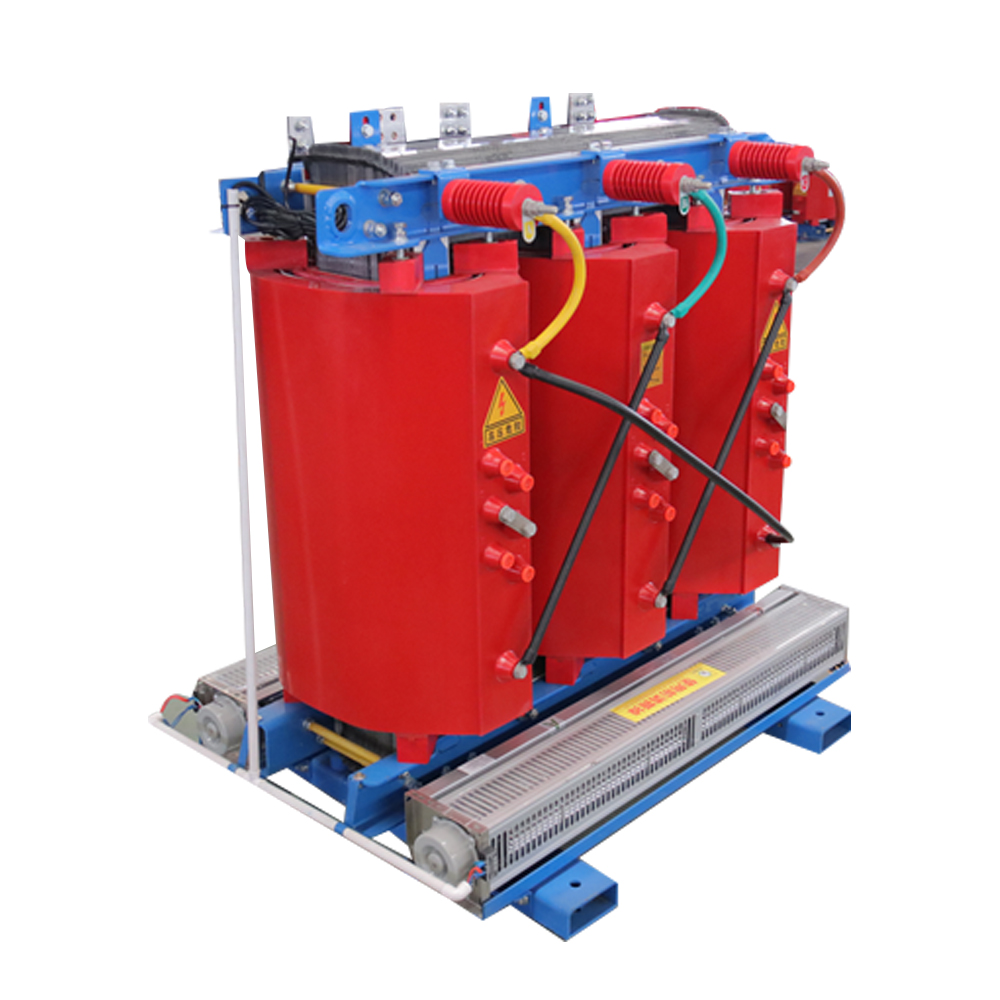
The superior performance of modern Dry Type Transformer units stems from meticulous material selection and process engineering. The following table details critical material innovations and their functional advantages:
| Component | Material Specification | Performance Advantage |
|---|---|---|
| Conductive Elements | H62 Copper Alloy | Enhanced conductivity reduces resistive heating by 15-20% compared to standard alloys |
| Insulation System | Epoxy resin cast insulation material | Achieves Class F (155°C) thermal rating with high temperature resistance and flame retardancy |
| Sealing Components | Acrylic Ester Rubber | Maintains elasticity in extreme environment conditions from -40°C to +120°C |
| Structural Frame | Hot-Dip Galvanized Steel | Provides 30-year corrosion resistance in humid, dusty, and corrosive gas environment settings |
| Cooling System | Natural air cooling (AN) / Forced air cooling (AF) | Adaptable thermal management with IP23 protection level enclosures |
The manufacturing process incorporates several TSTY-exclusive innovations that elevate Dry Type Transformer reliability. The transparent insulating paint application enables real-time quality verification, while the seven-step core lamination process minimizes magnetic flux leakage – directly contributing to low loss characteristics. These design elements collectively extend service life to 30 years, nearly double the industry average for conventional transformers.
The operational superiority of Dry Type Transformer technology manifests through several quantifiable benefits that address contemporary infrastructure challenges:
Enhanced Safety Profile: The oil-free cooling system eliminates explosion risks associated with oil-filled units, while epoxy resin casting provides inherent fireproof and explosion-proof properties. This makes them ideal for high-rise buildings, tunnels, and underground power stations where fire suppression systems are limited.
Environmental Resilience: With IP23 protection level enclosures and specialized materials, these units withstand extreme environment conditions including high temperature resistance up to 120°C, moisture resistance in 95% humidity, and operation in corrosive gas environment settings. This durability ensures safe and reliable operation in airports, docks, and stations exposed to harsh elements.
Maintenance Efficiency: The maintenance-free design reduces life cycle operation and maintenance costs by 60%+ compared to oil-immersed alternatives. Without oil to monitor or replace, operators eliminate leakage risks and associated environmental hazards – a crucial factor for hospitals and theaters requiring uninterrupted service.
Acoustic Performance: Advanced core clamping and low noise design (typically below 65dB) make these transformers suitable for hotels, business centers, and urban power grids where noise pollution regulations are stringent.
Dry Type Transformer technology demonstrates exceptional adaptability across diverse operational scenarios through specialized design configurations:
In subway and rail transit systems, the high short-circuit resistance and vibration-dampening mounts ensure stability during frequent load fluctuations and mechanical shocks. For combined substations serving new energy grid connection points, the wide voltage range adaptation (6.6kV-35kV) accommodates variable renewable energy inputs while maintaining grid stability. The pollution-free operation is particularly valuable in hospitals and airports where air quality standards prohibit oil vapor emissions.
Thermal management innovations allow these transformers to operate efficiently in space-constrained environments. The natural air cooling (AN) mode suffices for standard commercial loads, while forced air cooling (AF) systems engage during peak demand periods – a critical feature for business centers and hotels with fluctuating occupancy patterns. This dual-mode cooling extends transformer capacity by 40% without increasing footprint, optimizing space utilization in high-rise buildings.
When evaluated against conventional oil-immersed transformers, Dry Type Transformer units demonstrate decisive advantages across multiple performance dimensions:
| Performance Metric | Dry Type Transformer | Oil-Immersed Transformer | Advantage |
|---|---|---|---|
| Fire Risk | Fireproof and explosion-proof | High fire hazard | 100% elimination of fire risk |
| Environmental Impact | Pollution-free operation | Oil leakage potential | Zero contamination risk |
| Maintenance Requirements | Maintenance-free design | Regular oil testing/replacement | 60%+ lower lifecycle costs |
| Installation Flexibility | Indoor/outdoor with IP23 protection level | Outdoor only | 50% more placement options |
| Operational Noise | Low noise (<65dB) | Moderate noise (70-80dB) | Suitable for noise-sensitive areas |
The mechanical strength of Dry Type Transformer windings – achieved through epoxy resin casting – provides exceptional high short-circuit resistance, withstanding fault currents up to 25 times rated current without degradation. This resilience is particularly valuable in urban power grids where fault clearance times may be extended.
As electrical systems evolve toward greater sustainability and resilience, Dry Type Transformer technology aligns perfectly with emerging infrastructure trends. The oil-free cooling system eliminates hazardous waste disposal concerns, while the epoxy resin cast insulation material enables recyclability at end-of-life – supporting circular economy principles. For new energy grid connection applications, these transformers accommodate the variable power profiles of solar and wind generation through advanced thermal management systems.
The integration of smart monitoring capabilities represents the next frontier in Dry Type Transformer development. Embedded sensors track partial discharge levels, thermal gradients, and insulation integrity in real-time, enabling predictive maintenance that further extends service life beyond the standard 30-year design basis. This technological evolution ensures Dry Type Transformer units will remain central to industrial and commercial power distribution networks for decades to come.
In conclusion, the sophisticated component architecture of Dry Type Transformer systems – from the oriented silicon steel sheet core to the epoxy resin casting insulation – delivers unmatched performance across safety, efficiency, and reliability dimensions. Their ability to operate in extreme environment conditions while maintaining low loss, low noise, and high short-circuit resistance characteristics makes them indispensable for modern infrastructure. As urbanization intensifies and environmental regulations tighten, the Dry Type Transformer stands as the definitive solution for safe and reliable operation in high-rise buildings, hospitals, tunnels, subways, and beyond – proving that superior engineering creates both immediate value and long-term sustainability.


